Circular Combat Flow
Design combat spaces with multiple routes and no dead ends, encouraging constant movement and giving players more tactical options.
A standalone Starfield quest where a delivery mission becomes a rescue operation inside a hospital under attack.
Firefly is a standalone single-player quest for Starfield, designed for players around levels 13–17.
What begins as a delivery mission to Doctor Anderson quickly turns into a rescue mission when the hospital comes under attack. After securing the lab, players uncover the truth behind the experiments and must choose between sacrificing lives for a potential cure or shutting the project down.
The quest blends combat and storytelling across six combat zones, from an outdoor plaza to an indoor medical lab. Guided by the concept of circular flow, the level encourages players to adapt their tactics while narrative moments provide pacing and deepen immersion.
Design combat spaces with multiple routes and no dead ends, encouraging constant movement and giving players more tactical options.
Use distinct visual landmarks to help players understand their location and navigate the level with less confusion.
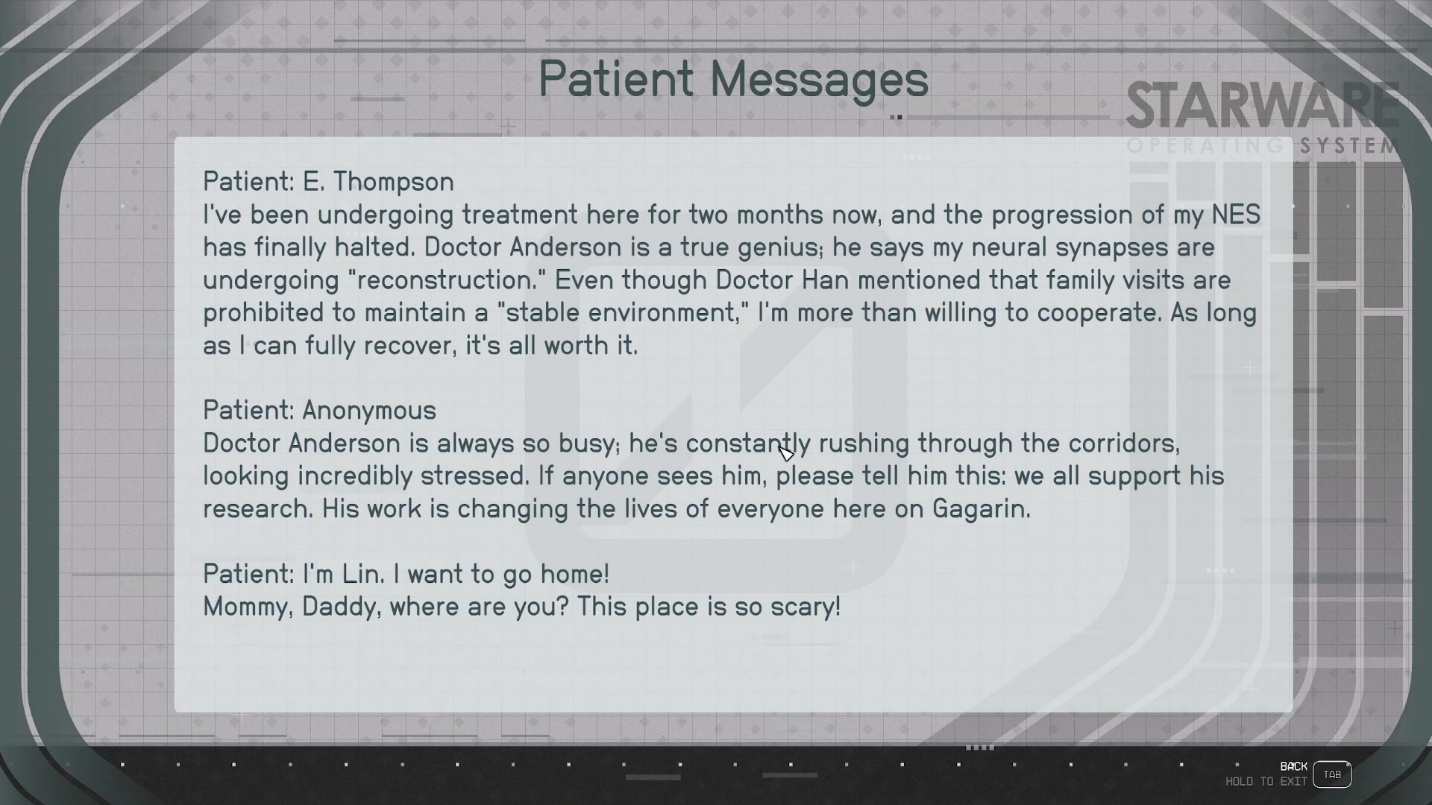
Deliver the main story through quest dialogue while using terminals, notes, and scene composition to reward exploration and reveal additional story elements.
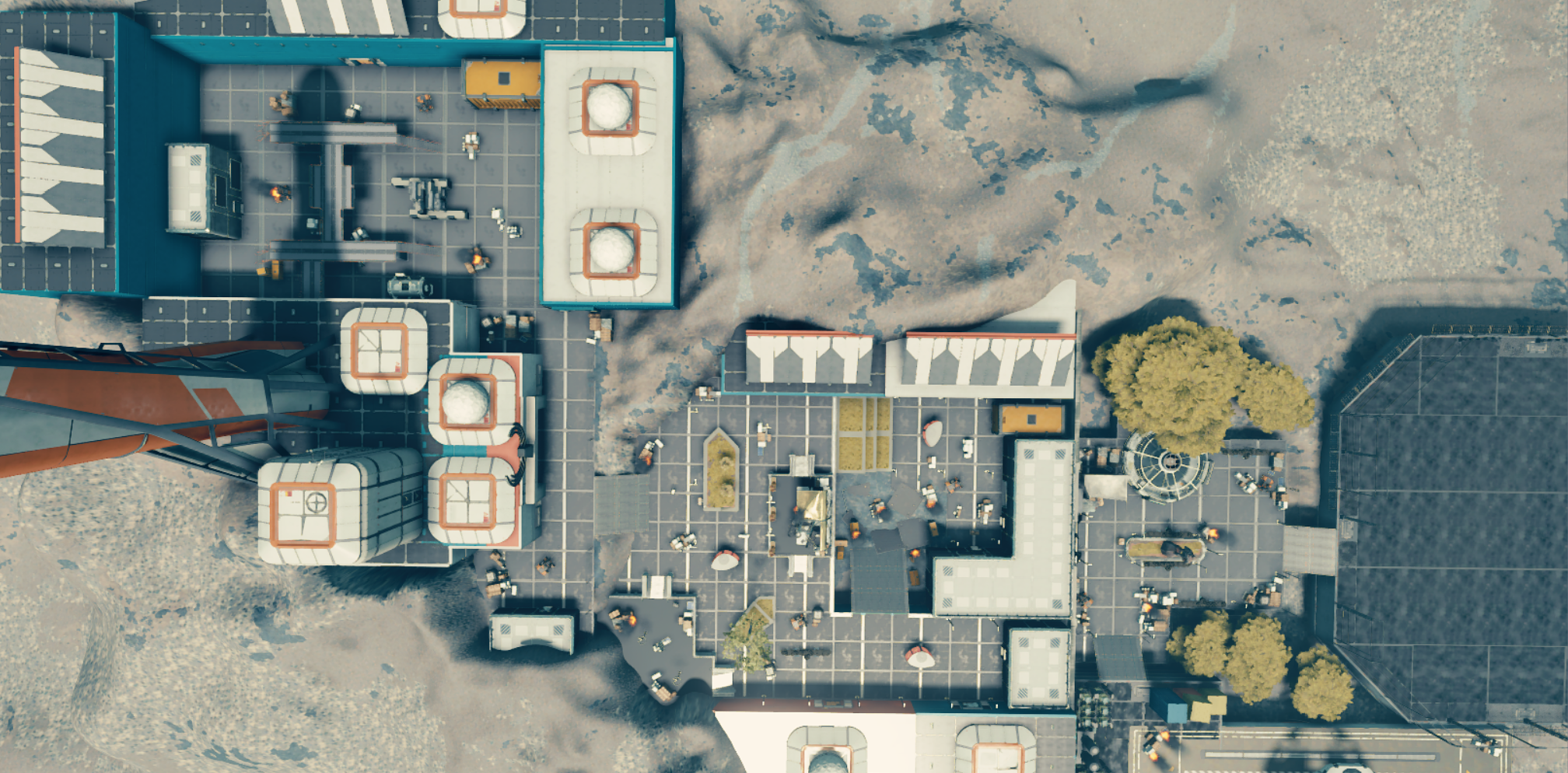
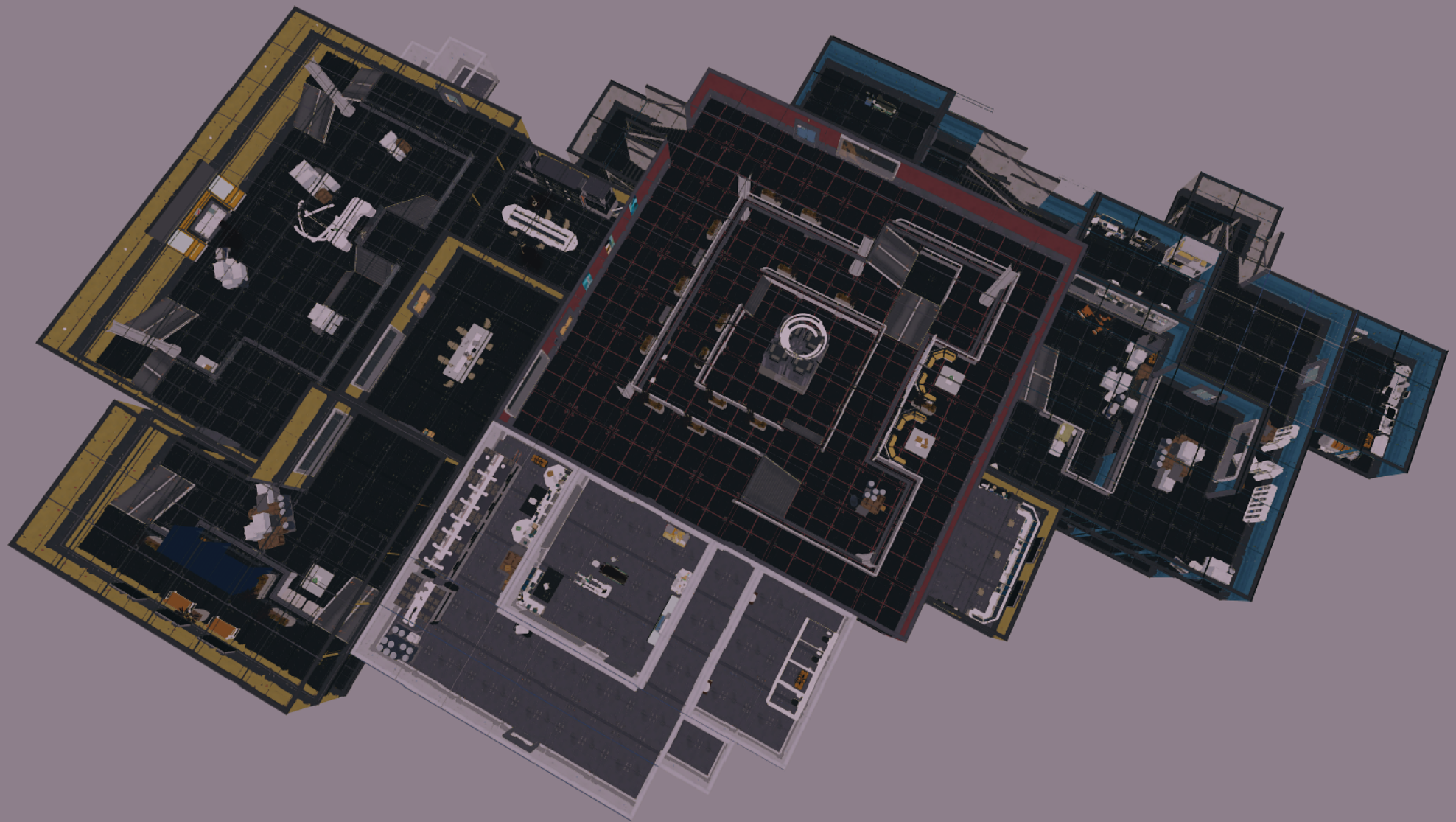
For the exterior, I used catwalks and high ground to divide the space into distinct functions: the main combat area, the main walkway, and an alternate path. I established the intended gameplay function for each space, then placed cover to support the utility of those zones.
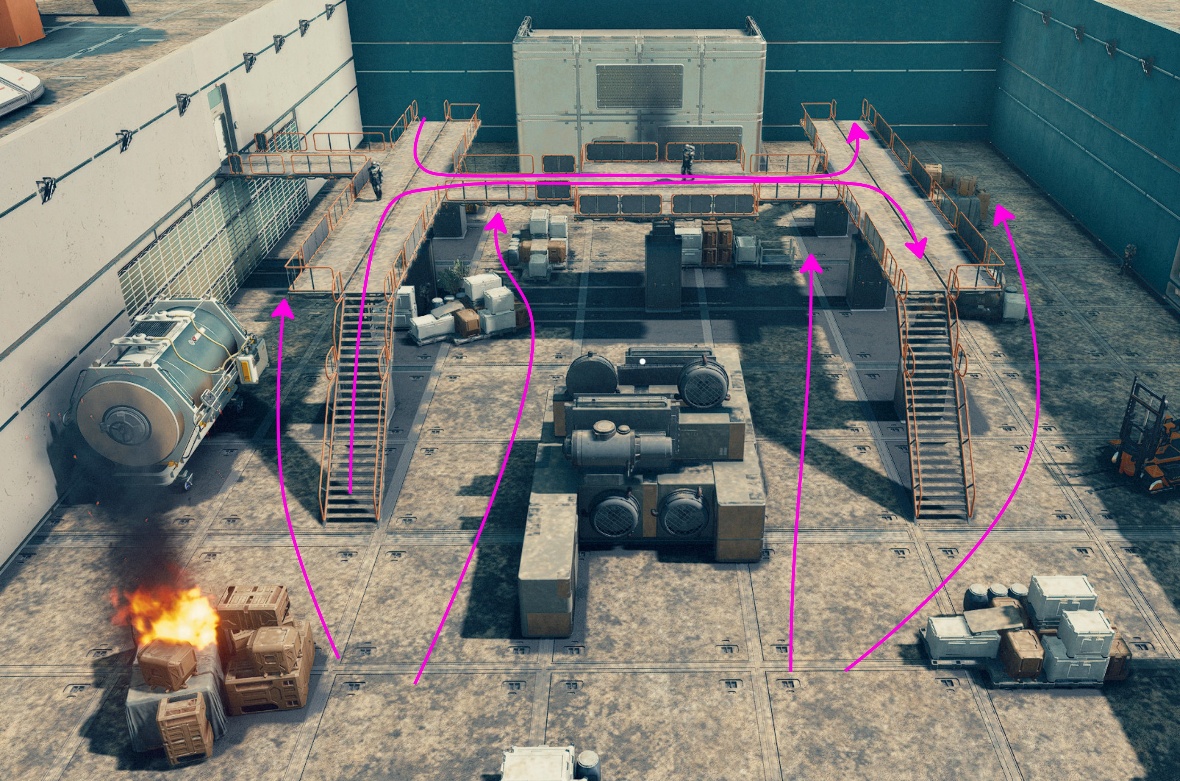
I first created the catwalk, which separates the area into three parts: the paths on both sides and the central area. Because the middle was too wide, I divided it into two paths and then placed cover to fill the combat zone. To complete the circular flow, I added a secondary staircase at the rear of the catwalks and joined the catwalks in the center, eliminating dead ends and supporting continuous player movement.
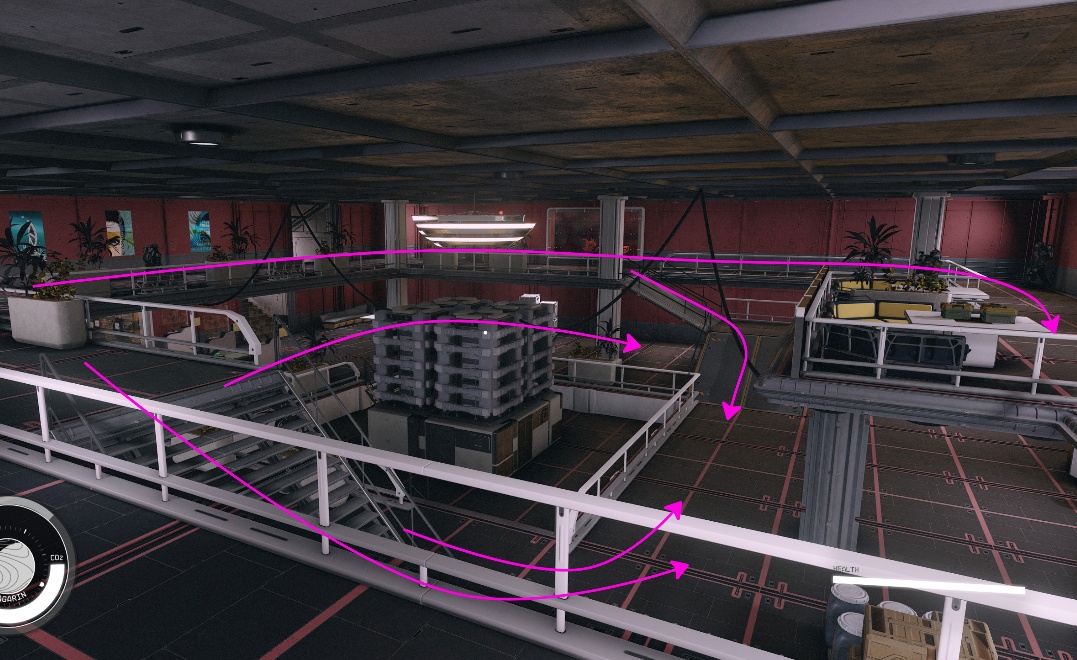
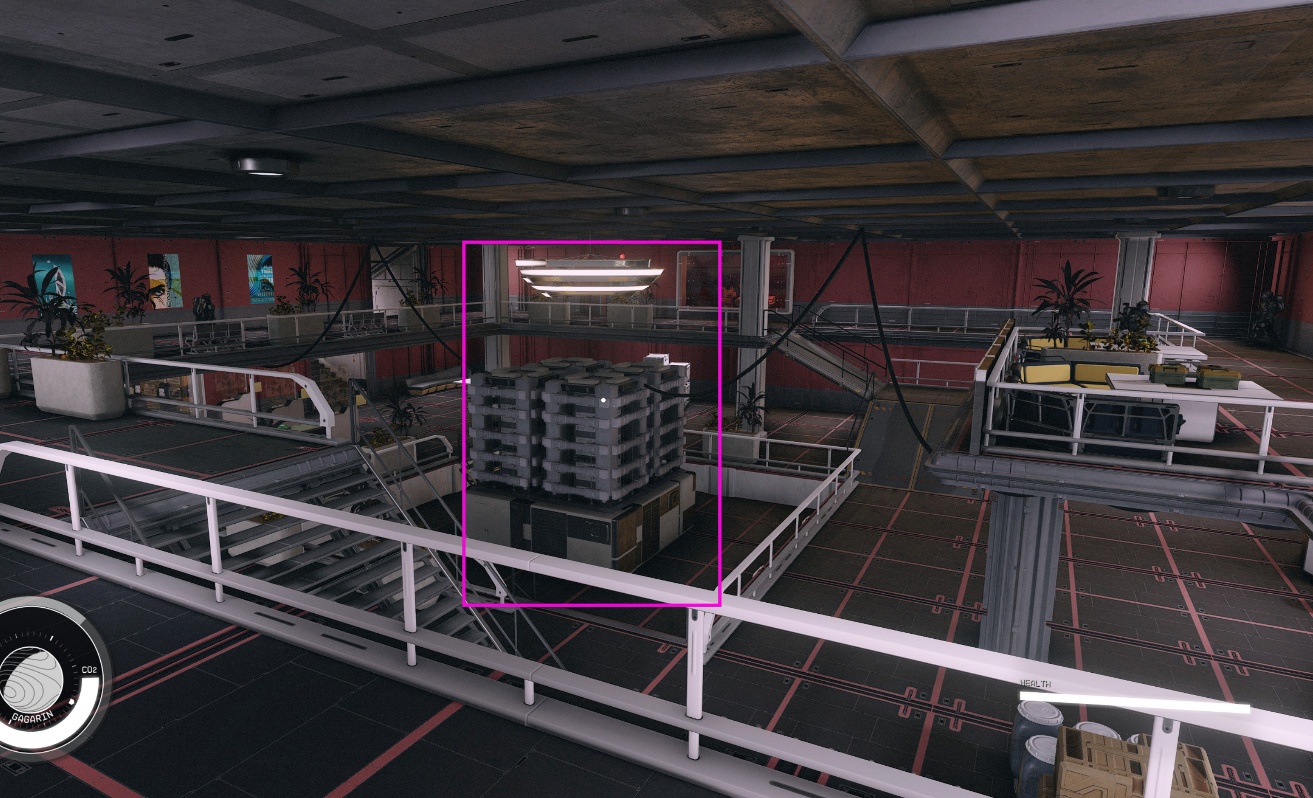
For the interior, emphasizing verticality expanded traversal choices and introduced greater complexity to NPC pathing and AI behavior. Multiple staircases create a vertical loop between two levels, allowing players to retreat to high ground for a tactical advantage or drop down to flank.
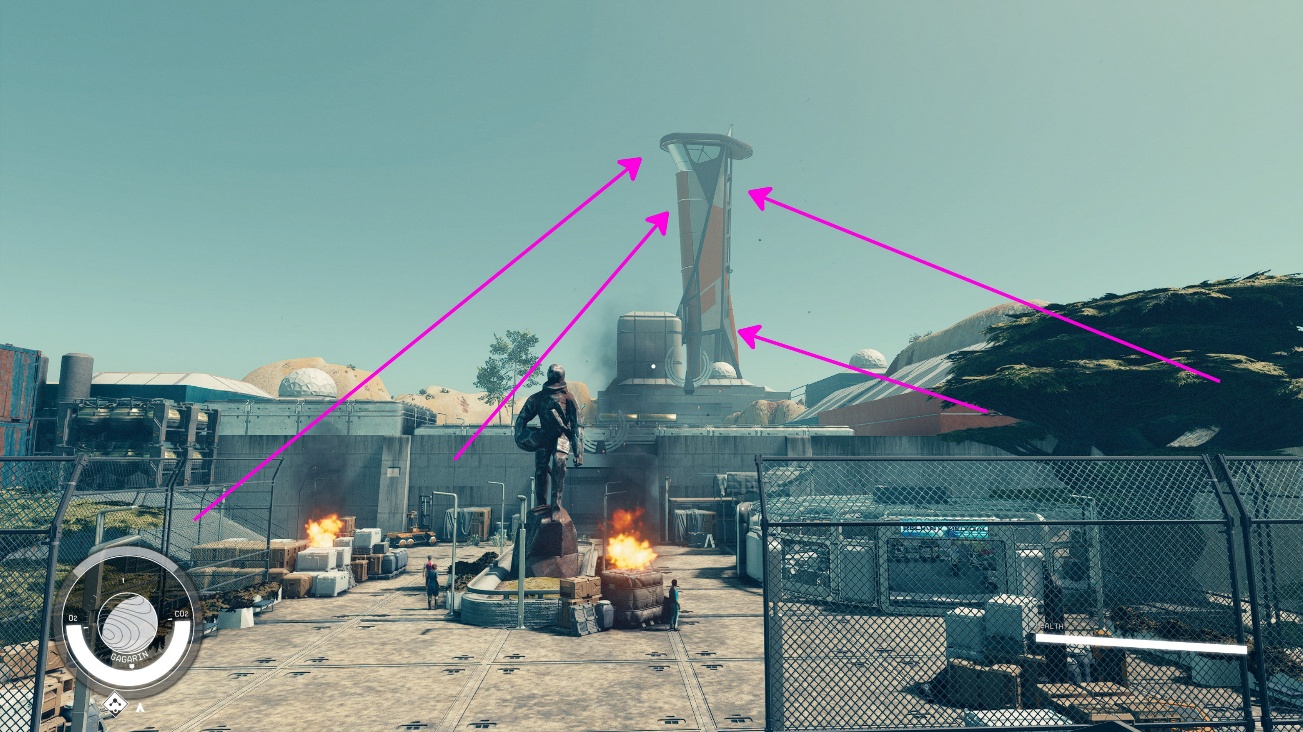
In the exterior, I used soft visual guidance. The architectural skyline creates leading lines that draw the eye toward the main objective, ensuring that the mission-critical building remains the focal point of the environment.
Inside the quest, I used the Center Hall as a landmark. It sits at the heart of the interior structure and players visit it multiple times, so I reinforced its visual identity with unique assets and a specialized color scheme.
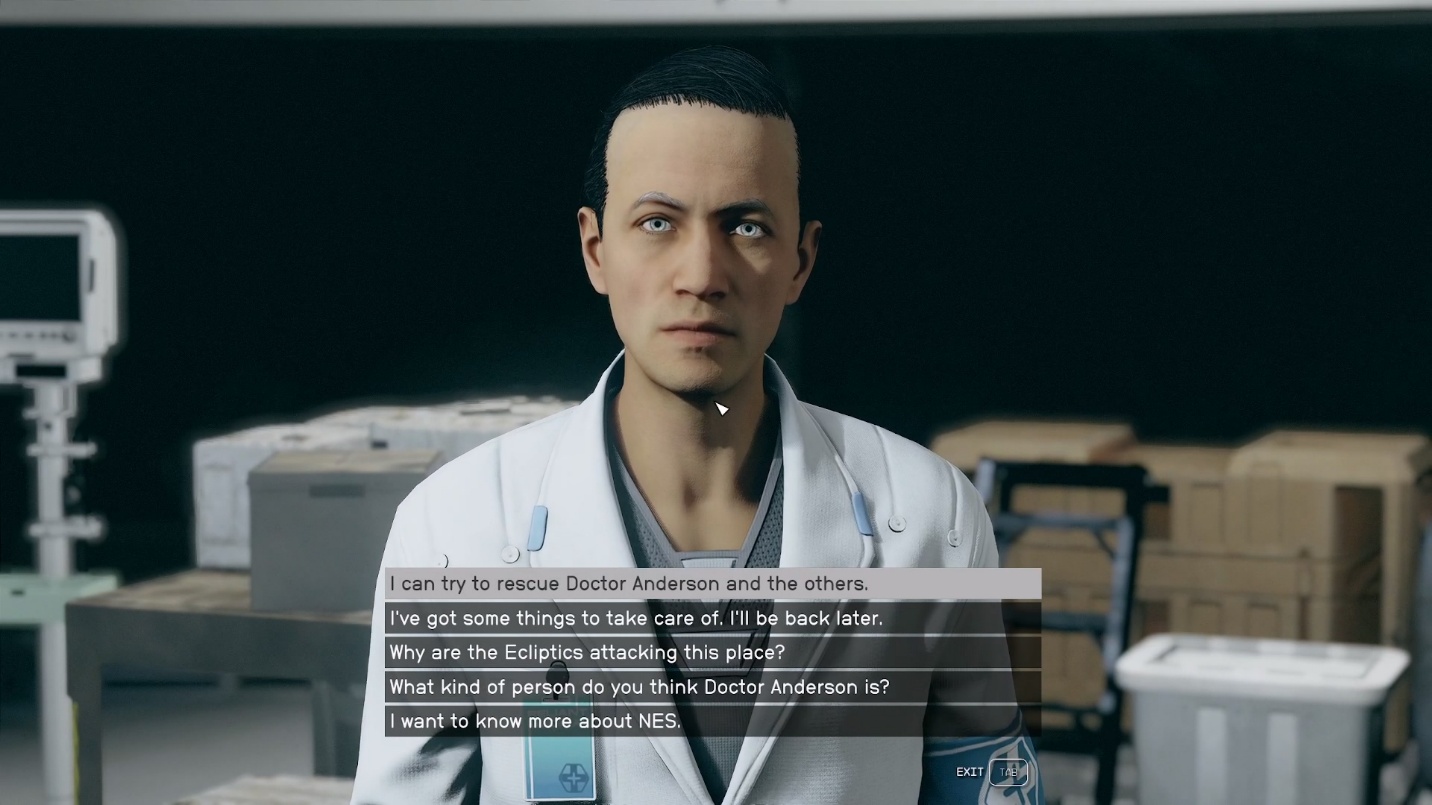
I expanded the background through branching dialogue outside the main questline, clarifying the origins of the conflict and giving players deeper context.
As the mission moves indoors, Doctor Anderson is the only character available for dialogue. I used terminals and data slates to offer alternative perspectives on the events, increasing the number of narrative beats throughout the level.