Make Player Actions Visibly Transform the Environment
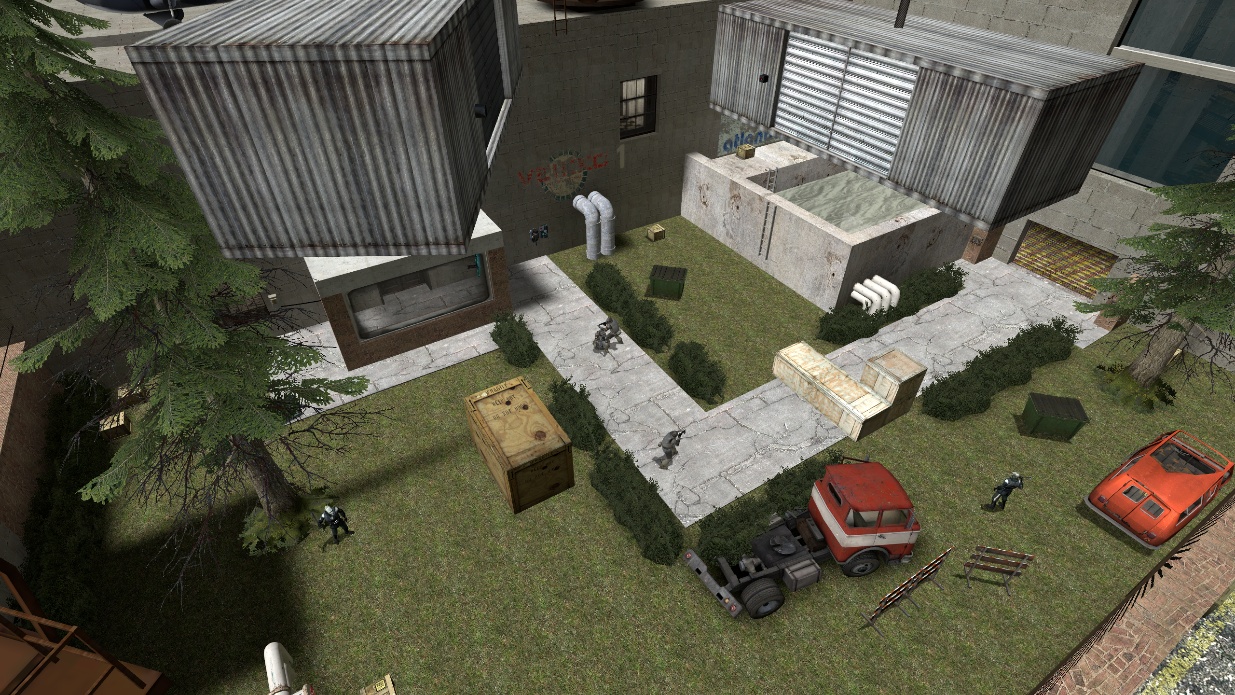
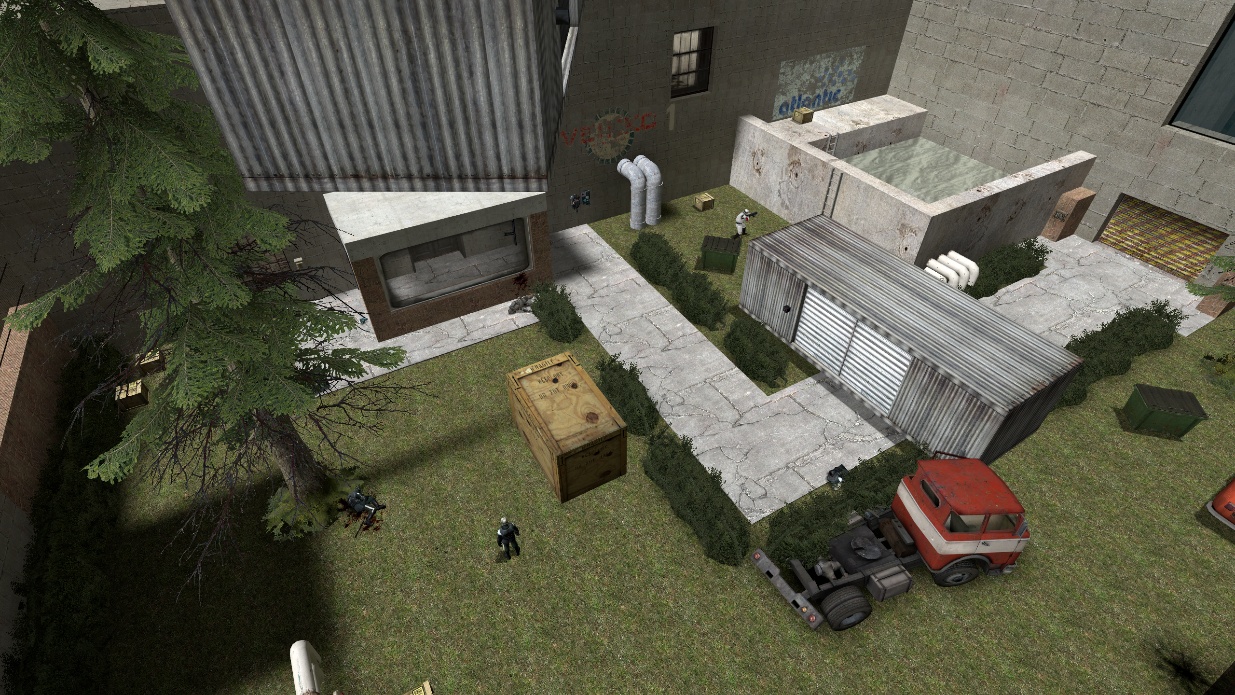
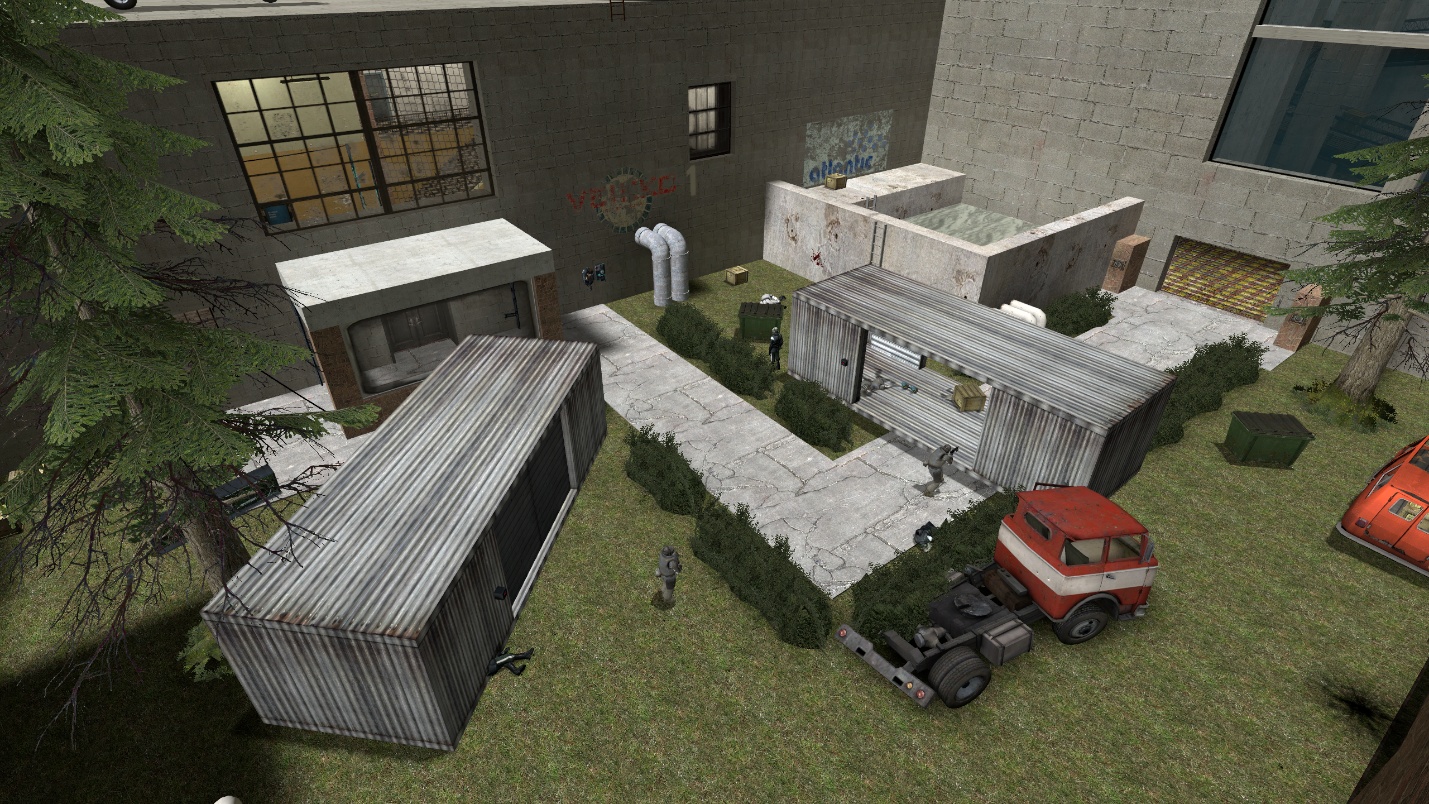
Let players see direct consequences of their actions, such as opening doors, disabling fences, and changing the layout of the yard.
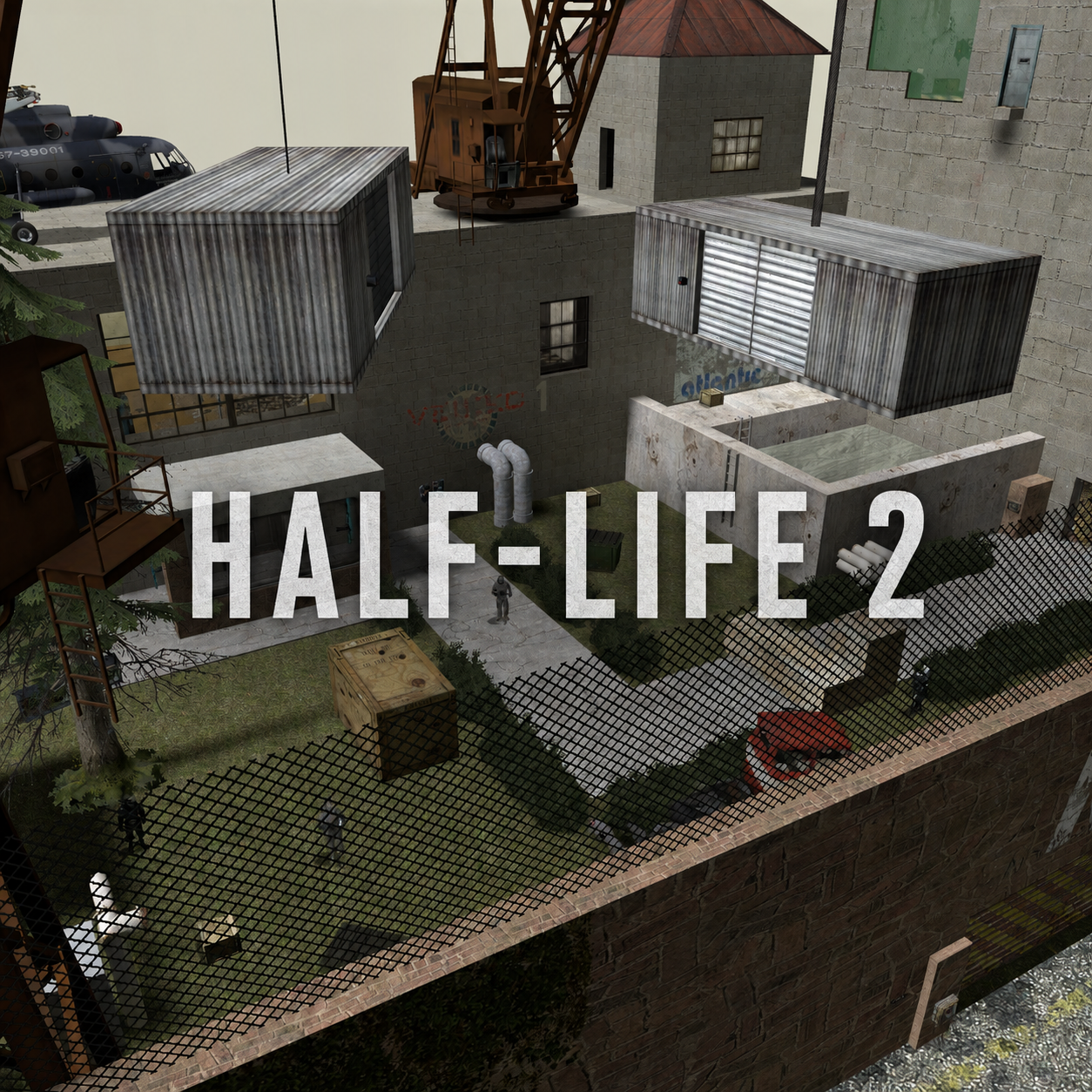
After White Forest, Gordon raids a nearby Combine warehouse to find a replacement engine for the Resistance's scrap-car race.
Pit Stop is a custom single-player level made for Half-Life 2, set after the end of Half-Life 2: Episode Two.
To celebrate the victory at White Forest, the Resistance organizes a scrap-car race. Gordon is the favorite to win, but his engine breaks down on the way. A Combine warehouse happens to be nearby, so it is time to raid Civil Protection for a new engine.
Let players see direct consequences of their actions, such as opening doors, disabling fences, and changing the layout of the yard.
Design cargo drops and leap-of-faith moments to create visual impact while also changing gameplay and pacing.
Revisit the same space with new cover layouts, enemy setups, and gameplay purposes so every return feels fresh and meaningful.
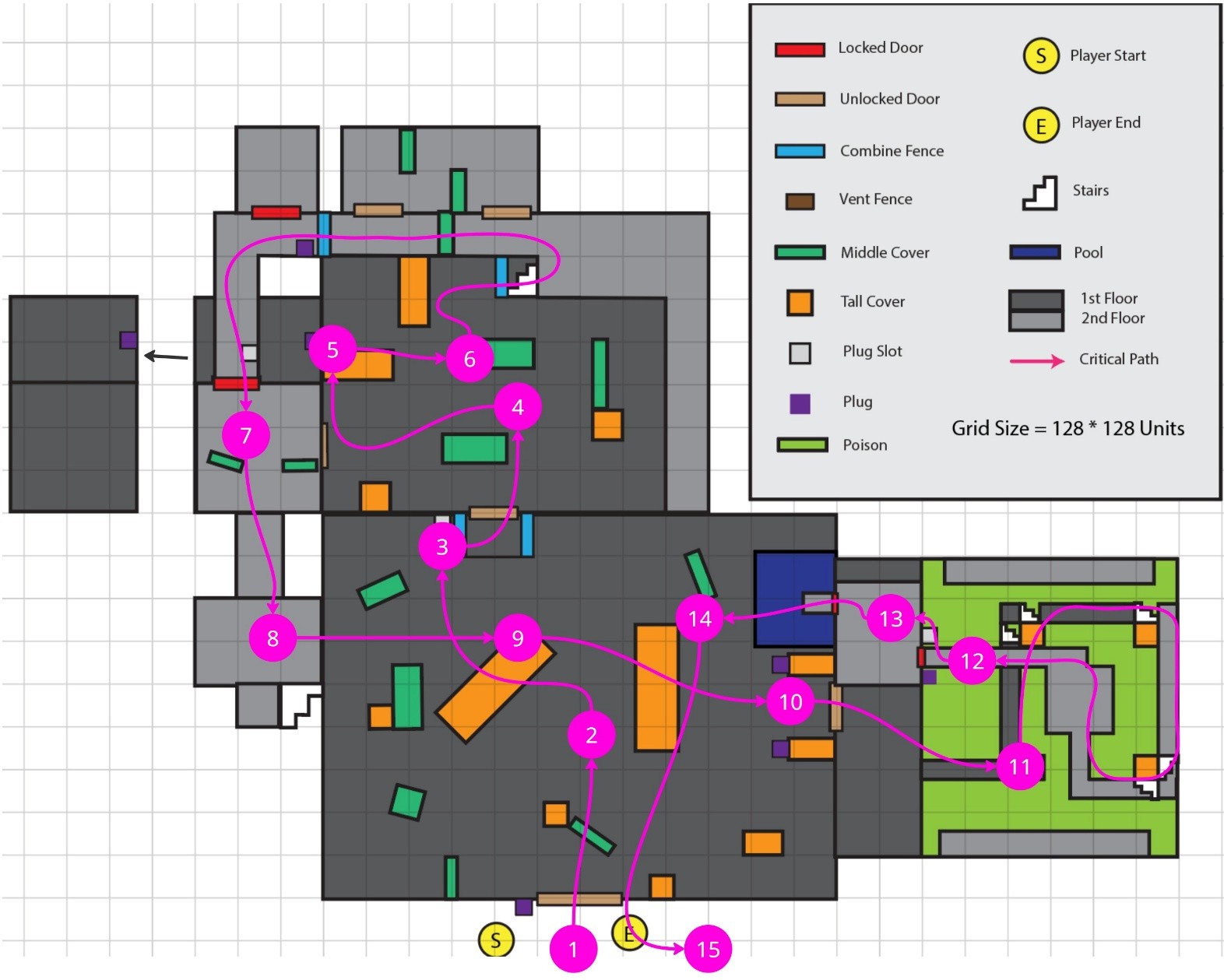
A key design goal was to make the player's actions produce clear and visible changes in the environment. Instead of presenting puzzles as isolated interactions, I connected them to changes that the player could immediately observe. Using a power plug, for example, can open a door or deactivate a Combine fence, clearly communicating the relationship between an action and its consequence.
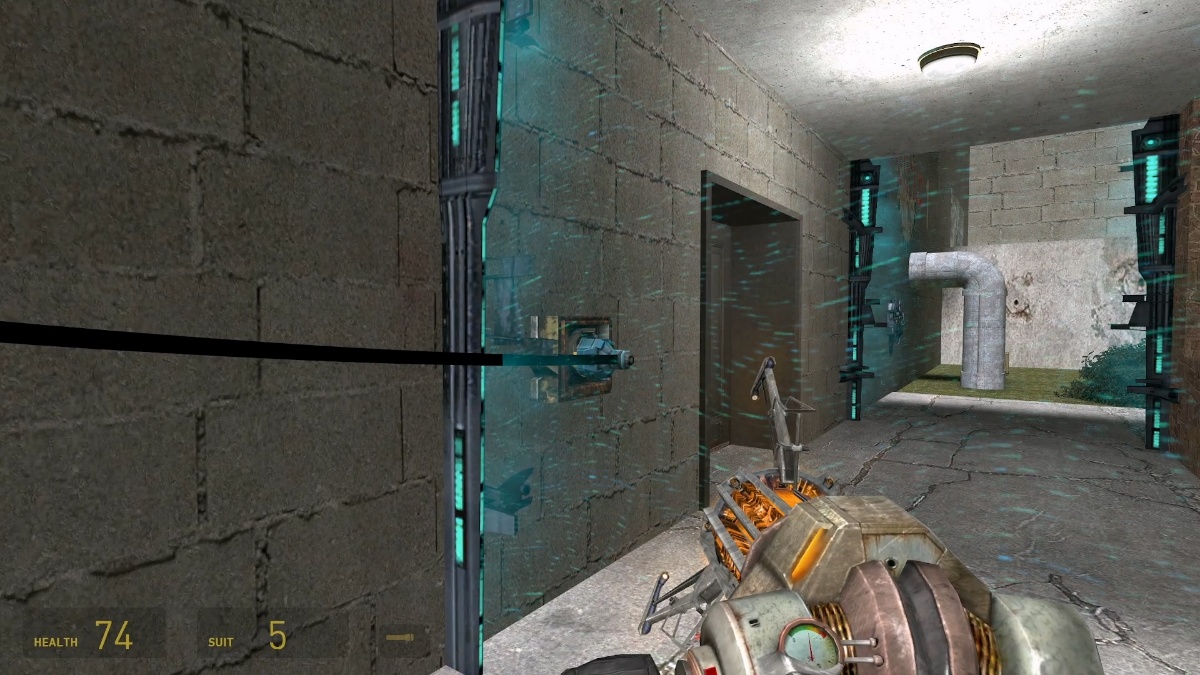
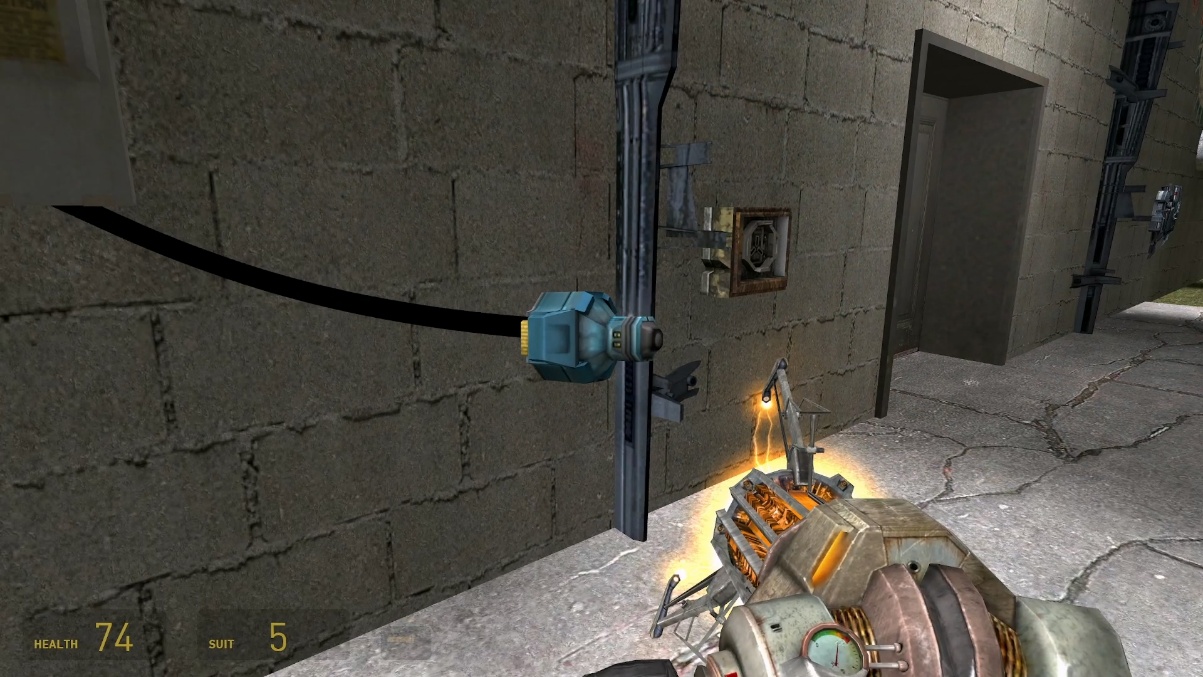
This idea is further emphasized through the crane sequences. When the player activates a crane, a cargo container physically falls into the yard, crushes enemies, and changes the layout of the space. The player is not only progressing through the level; they are actively transforming the environment. These visible changes reinforce player agency and make the world feel responsive to the player's decisions.
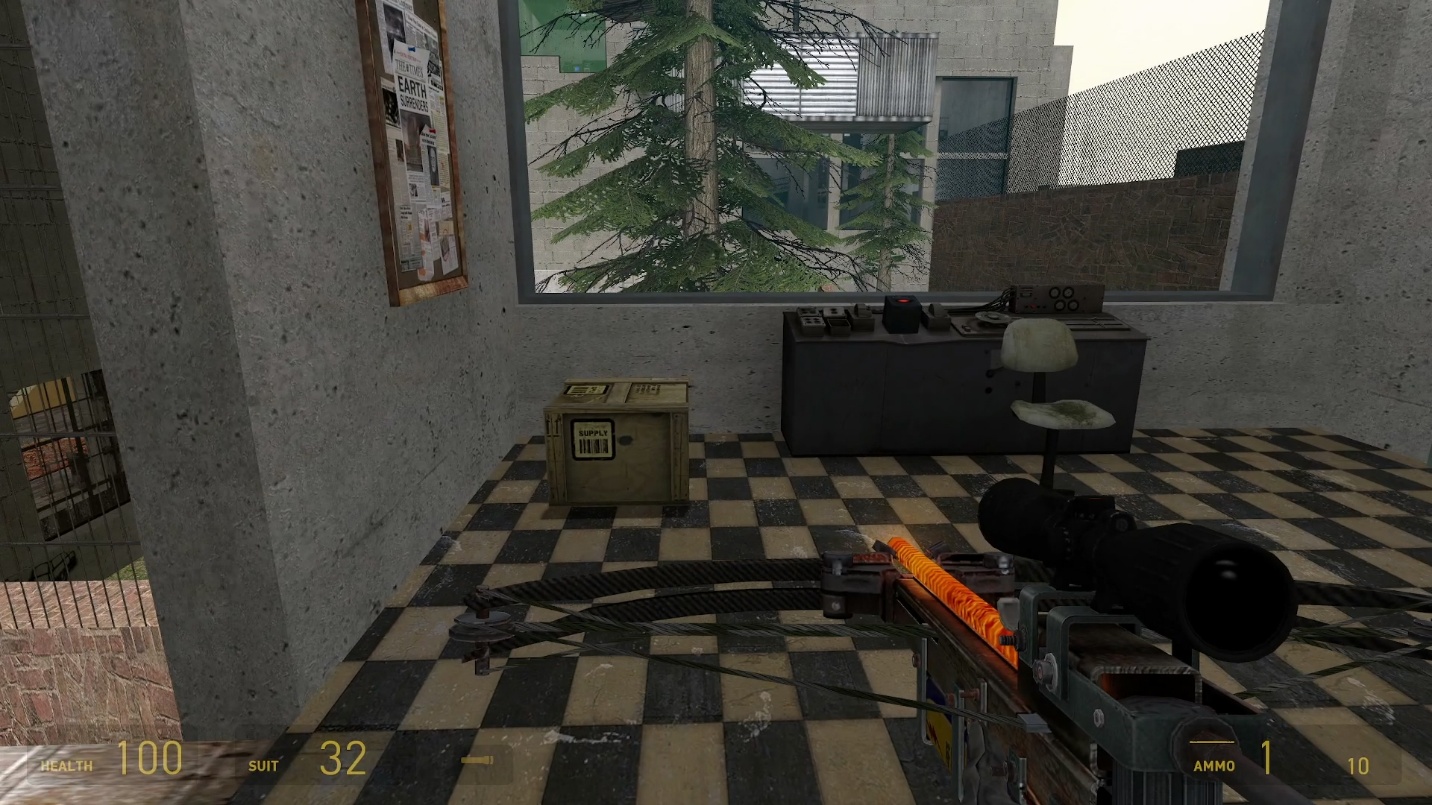
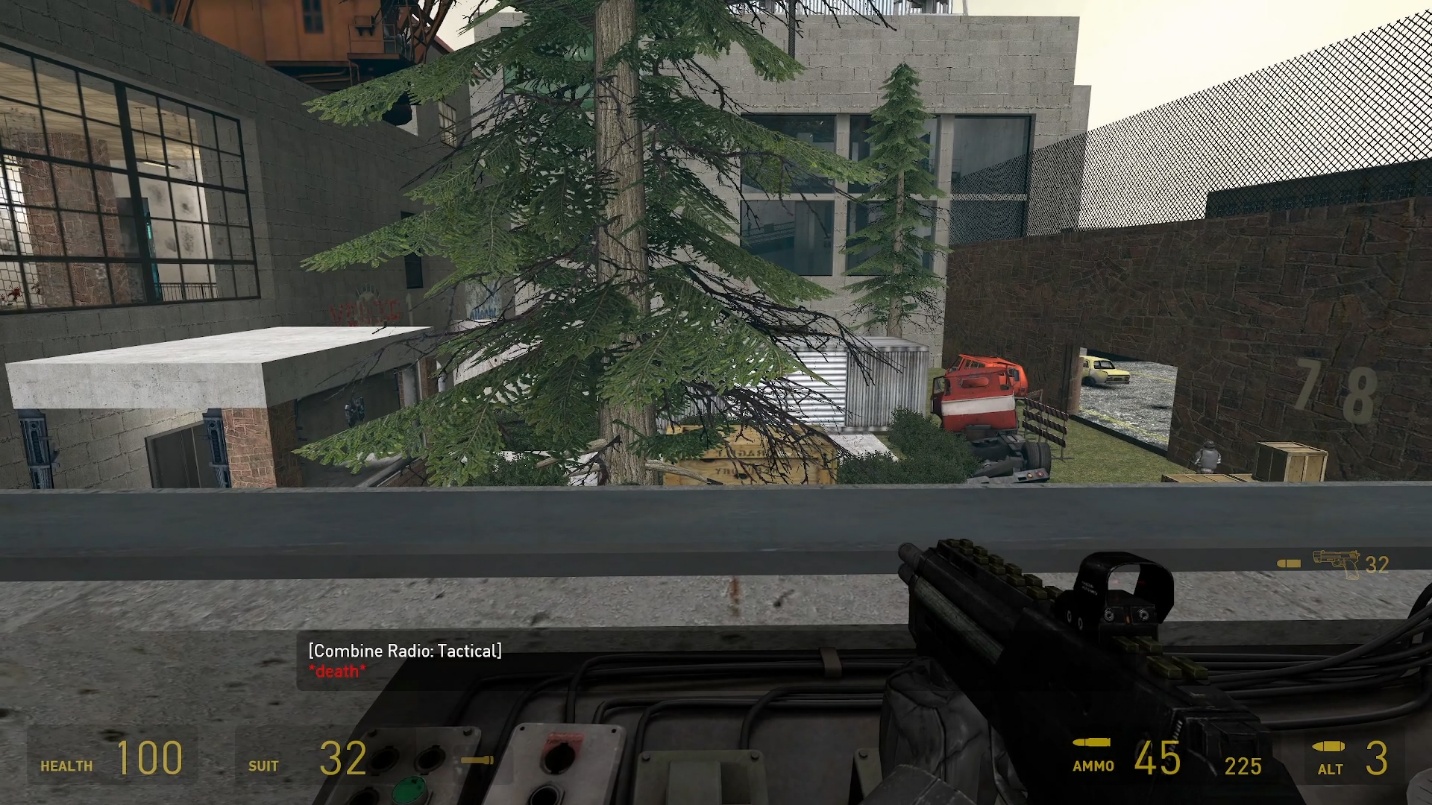
To create impactful cinematic moments, I designed two major set pieces involving falling cargo containers. At two different points in the level, players can activate crane controls to release containers from above.
Screen shake and sound effects enhance the sense of impact. Enemies are positioned beneath the containers so the falling cargo can crush them; their vocal reactions further reinforce the physicality of the event and make the sequence more dynamic and memorable.
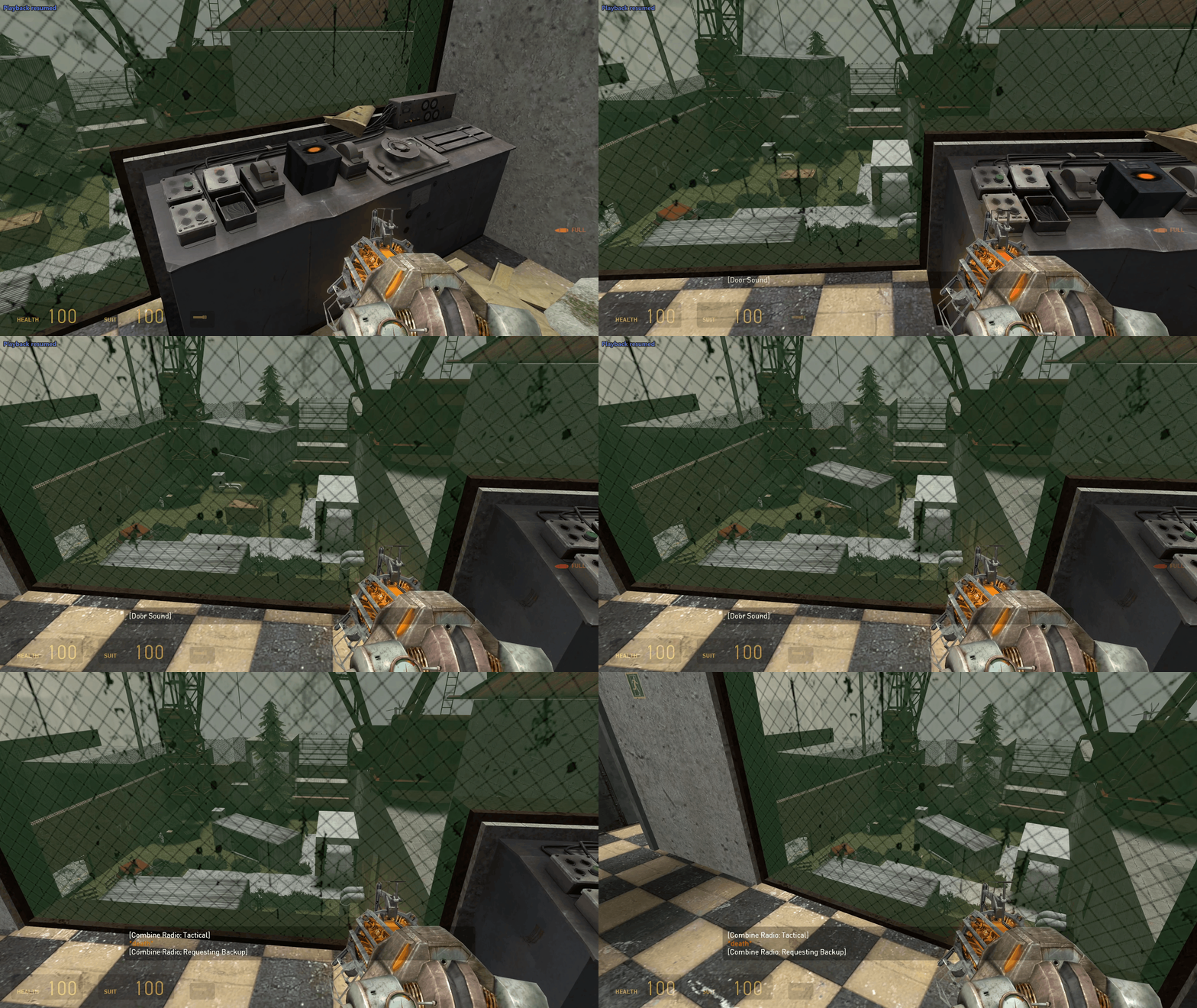
The cargo containers serve not only as cinematic elements, but also as tools for spatial reuse. The yard is revisited multiple times throughout the level, but each visit offers a different experience.
Once a container has fallen, it changes the player's sightlines, available cover, and movement options. The yard evolves from a familiar environment into a reconfigured combat arena, allowing the player to experience a new combat scenario while still recognizing the original layout.