Create Clear and Competitive Capture-the-Flag Flow
Design mirrored team bases and connected routes to support fair competition, readable objectives, and consistent back-and-forth action.
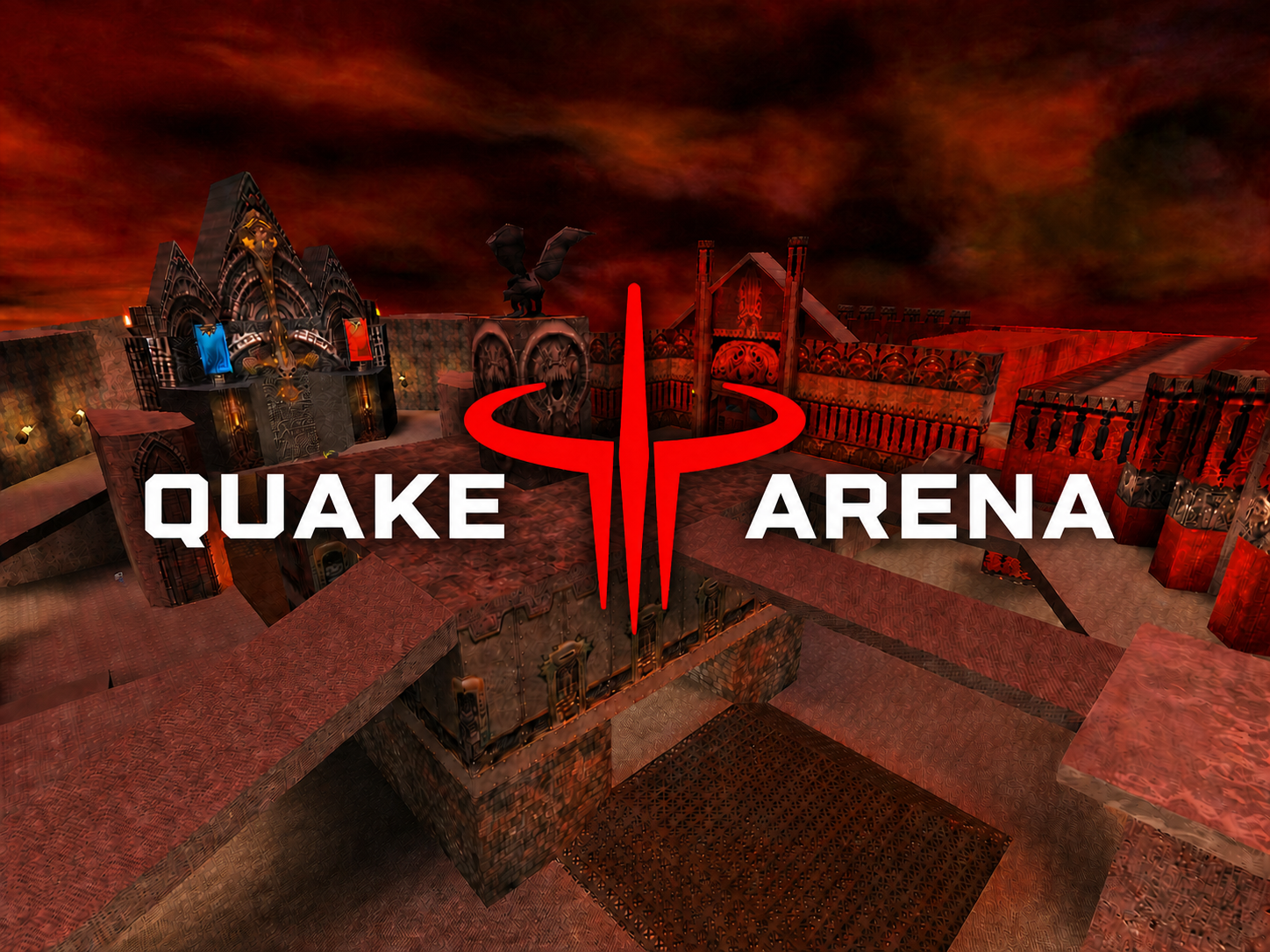
A competitive Capture the Flag map built around mirrored bases, vertical combat, and meaningful risk-reward decisions.
The Split is a 10-player Capture the Flag map for Quake 3 Arena. The map features two mirrored team bases connected by multiple combat routes, vertical pathways, catwalks, and a central lobby. Players can use jump pads, launch pads, weapons, armor, and power-ups to choose between safer routes and more aggressive plays. The map combines open sightlines with full-cover areas to support fast movement, varied combat strategies, and constant contest over key objectives.
Design mirrored team bases and connected routes to support fair competition, readable objectives, and consistent back-and-forth action.
Use multiple pathways, catwalks, jump pads, launch pads, and height changes to give players different movement and engagement options.
Place weapons, armor, health, and power-ups in strategically exposed locations so players must decide whether the potential advantage is worth the risk.

When designing this map, I made a paper map at first. I used Illustrator to create a floor plan. Then I made a 3D view to better verify the map’s vertical relationships. Finally, I gathered some aesthetic references. I organized all of this information into a document for convenient reference later.
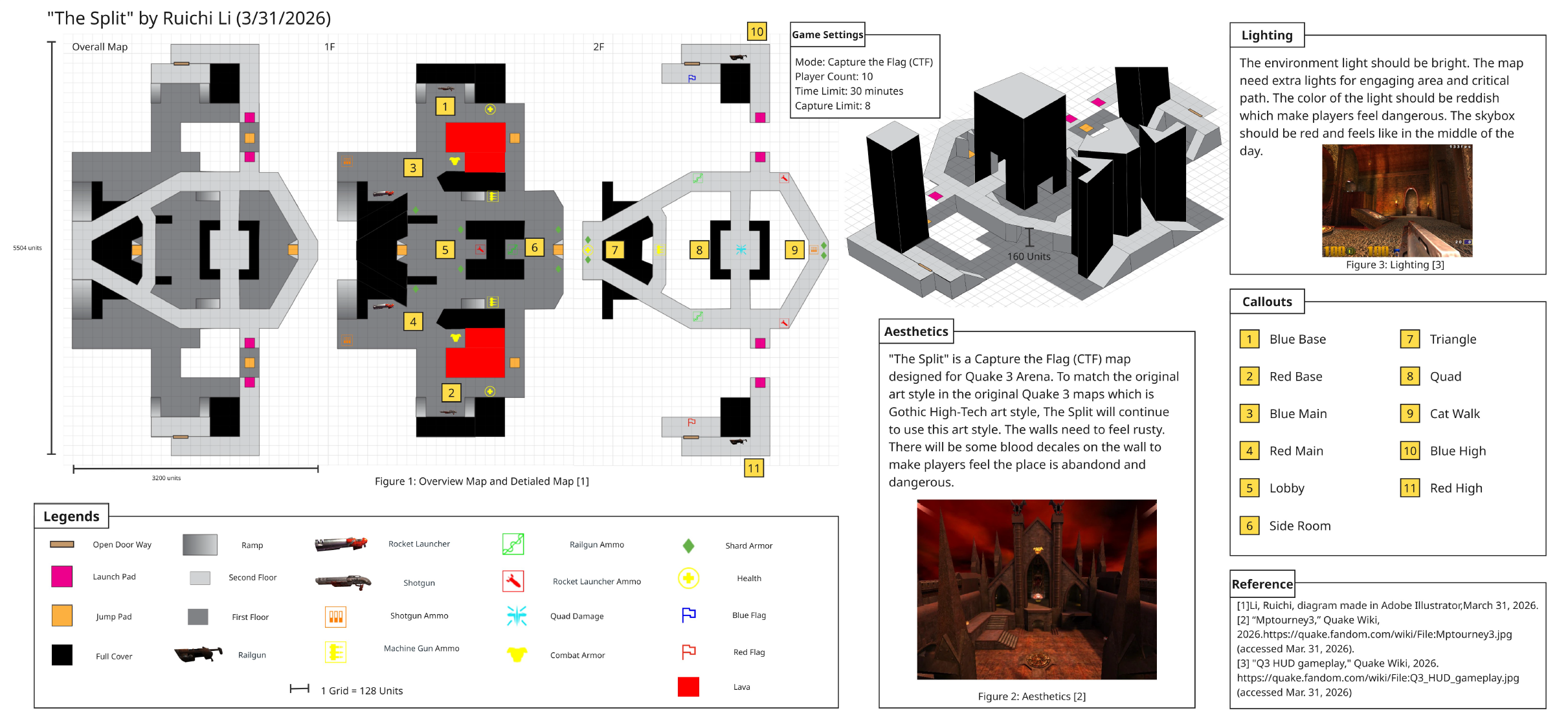
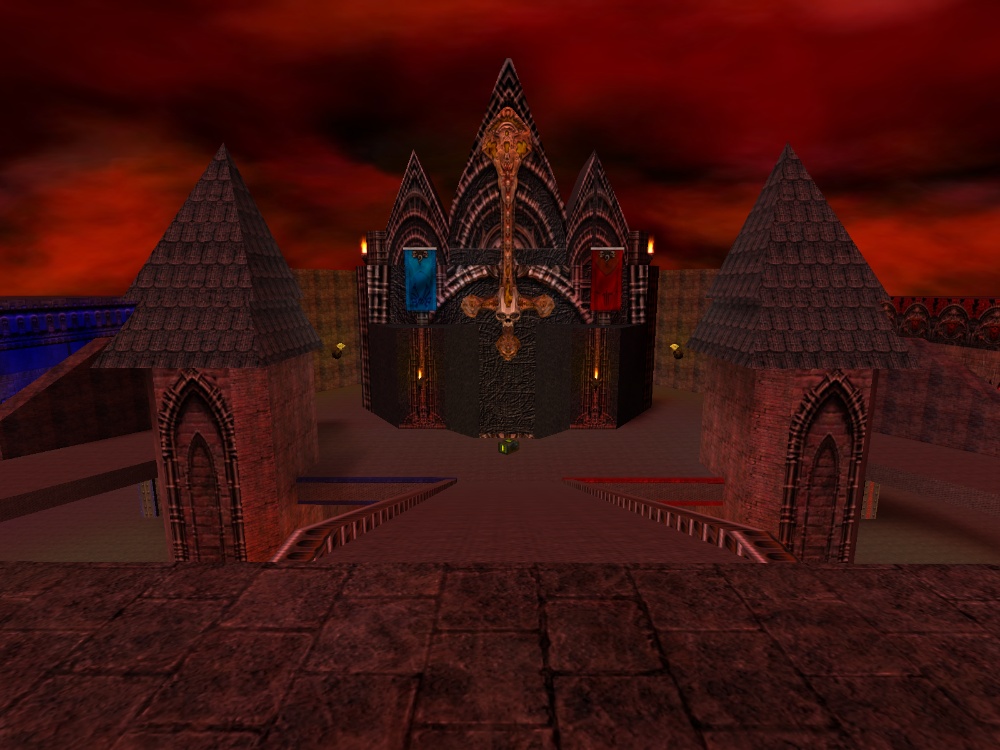
For The Split, I established a mirrored layout to create a fair and readable foundation for Capture the Flag gameplay. Both teams have comparable base structures, route distances, and access to key areas, which helps prevent one side from gaining an unintended positional advantage. I organized the map around clear landmarks such as the bases, Lobby, Triangle, Quad, and Catwalk. This structure allows players to quickly understand their location, identify their objective, and make informed decisions during attacks, retreats, and defensive rotations.
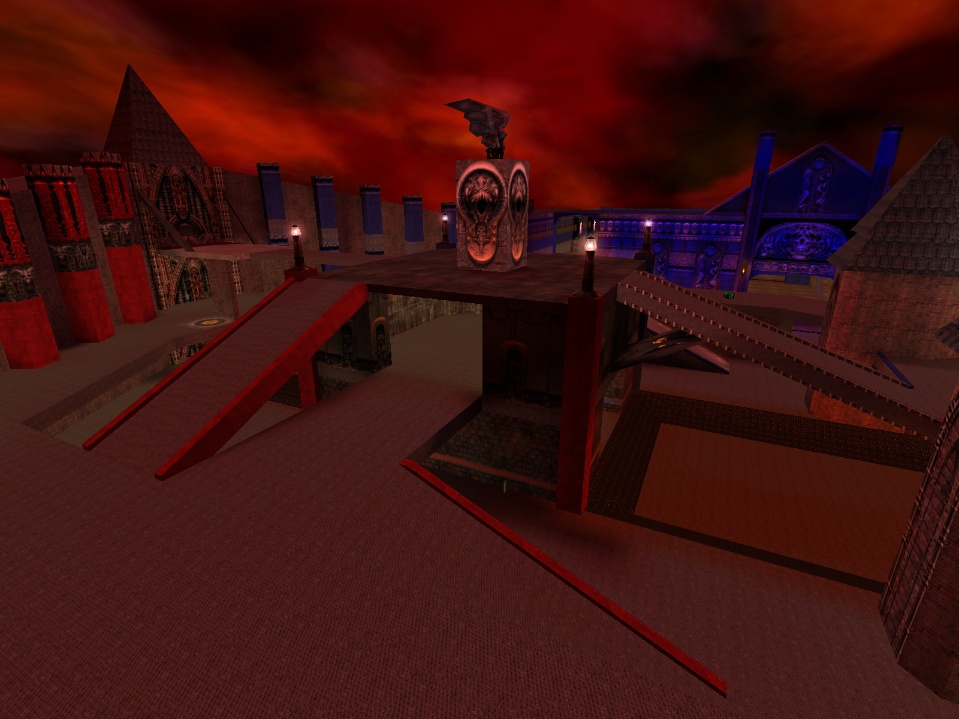
I designed multiple interconnected routes and vertical spaces to support different movement and combat styles. Players can travel through main corridors, side rooms, catwalks, and elevated areas, while jump pads and launch pads create faster but more exposed movement options. These routes allow players to choose between direct attacks, flanking maneuvers, defensive repositioning, and vertical engagements. By combining different elevations and traversal options, I aimed to make movement through the map an active strategic decision rather than simply a way to reach the objective.
Resource placement was designed to create competition and encourage players to take calculated risks. Weapons, armor, health, and power-ups are positioned in areas that offer valuable advantages but may also expose players to enemy sightlines or contested combat zones. This creates a continuous choice between staying on a safer route or entering a more dangerous area for a stronger reward. My goal was to make resource control an important part of the match flow while ensuring that players could use different strategies to achieve the same objective.
During development, I made several adjustments to the map based on playtest feedback. Overall, players responded positively, but two main issues became apparent: the map lacked a high point that could overlook the entire play space, and the team bases were difficult to access.
To address the first issue, I added a third floor above the Quad Damage area. This elevated position provides a strong sniping and overwatch location while introducing another important control point for players to contest. As a result, the map gained greater vertical variety and more strategic depth.
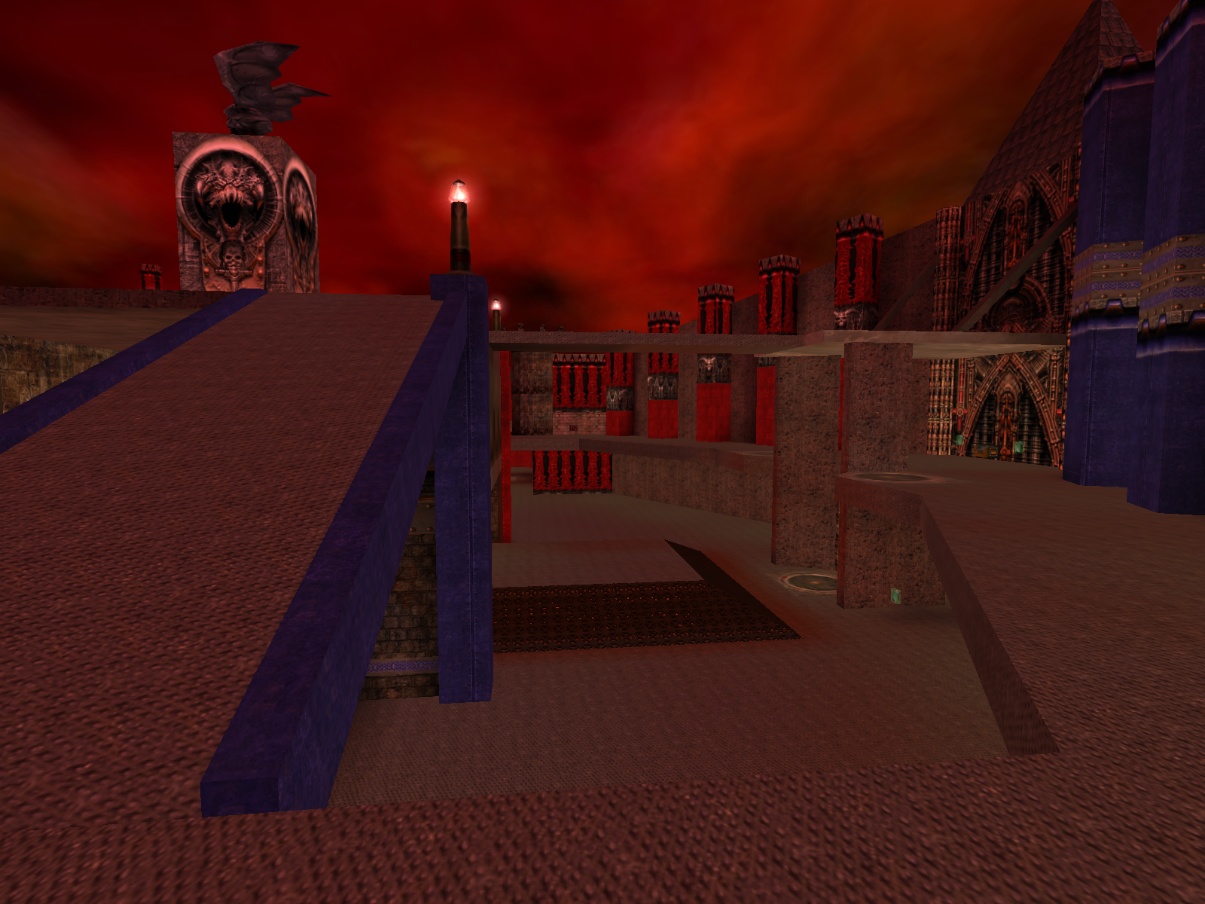
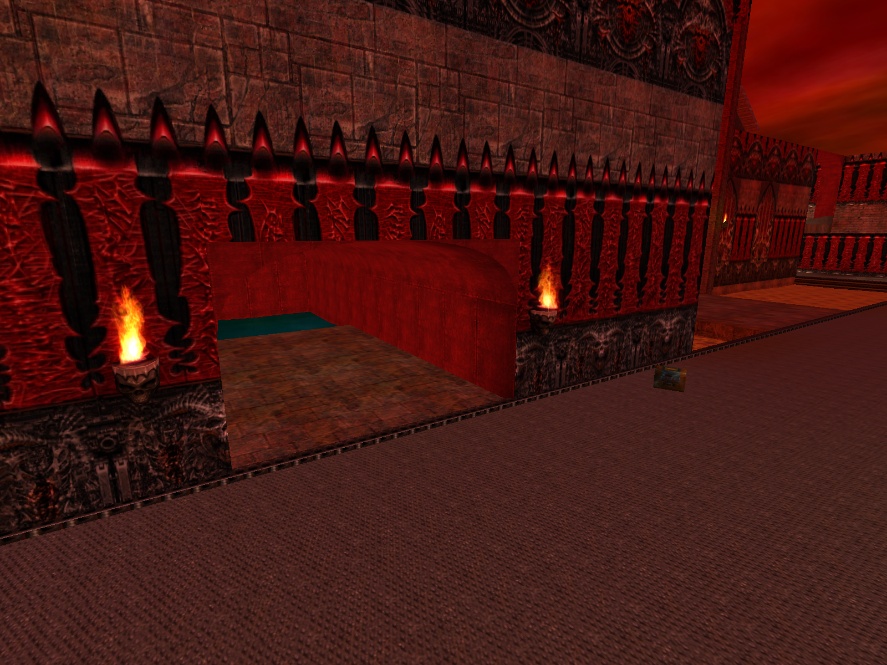
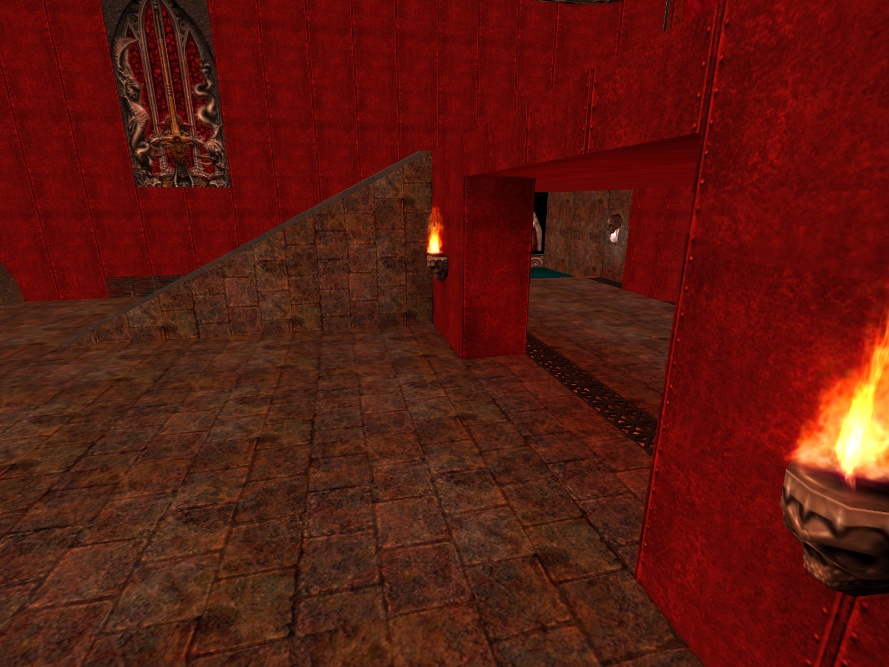
To improve base accessibility, I added a tunnel that gives players an alternative route into each base. This route makes attacking the bases more approachable while also creating opportunities for ambushes, close-quarters combat, and unexpected flanking plays.