Progressive Tutorialization
Gradually introduce jumping, double jumping, dashing, and combat so players can learn each mechanic clearly before using them together in more challenging situations.
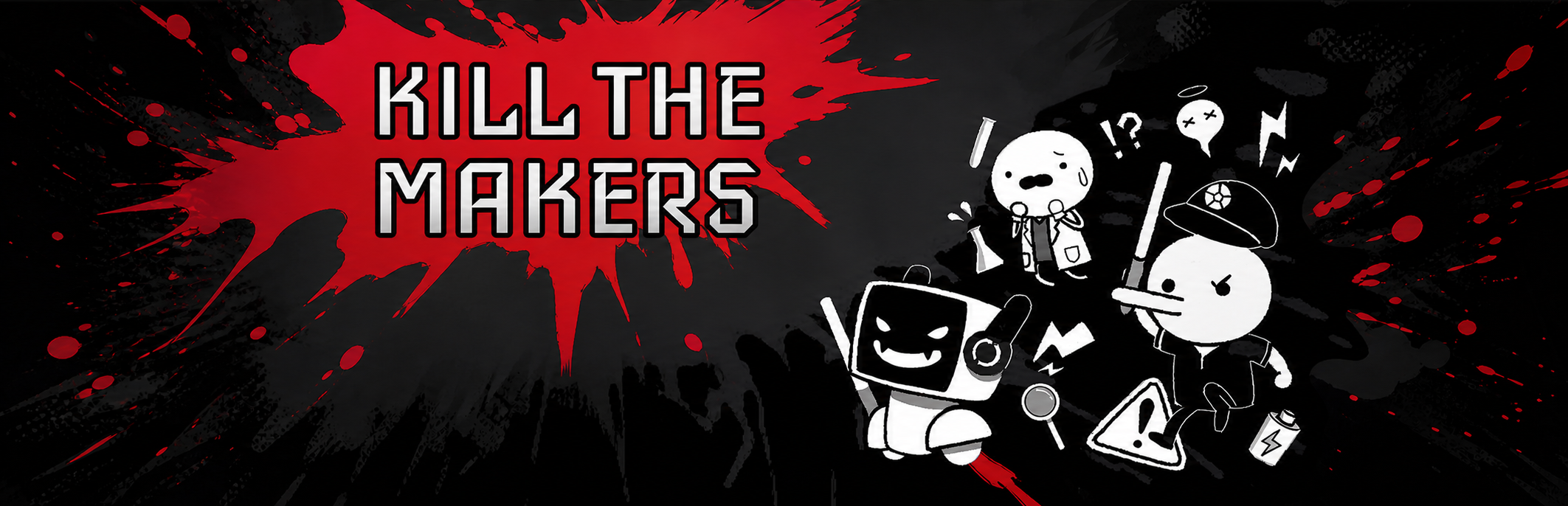
A 2D puzzle-platformer about movement, combat, resource management, and mastering environmental interactions.
Play as Skidmark the robot and escape from the evil lab.
As you proceed through the levels, you need to kill the scientists and guards to regain your energy lost over time. With a precise hit of a switch, you decide whether a laser gate is an impassable barrier or your next steppingstone.
Gradually introduce jumping, double jumping, dashing, and combat so players can learn each mechanic clearly before using them together in more challenging situations.
Teach players that combat is connected to survival by introducing enemies with different levels of aggression and showing that defeating enemies allows players to recover lost energy.
Introduce switches, laser gates, and environmental hazards through clear visual communication, then progressively combine these elements to build a sense of mastery.
In the first level of the game, I follow Nintendo’s 4-step level design philosophy: Introduction, Development, Twist, and Conclusion.
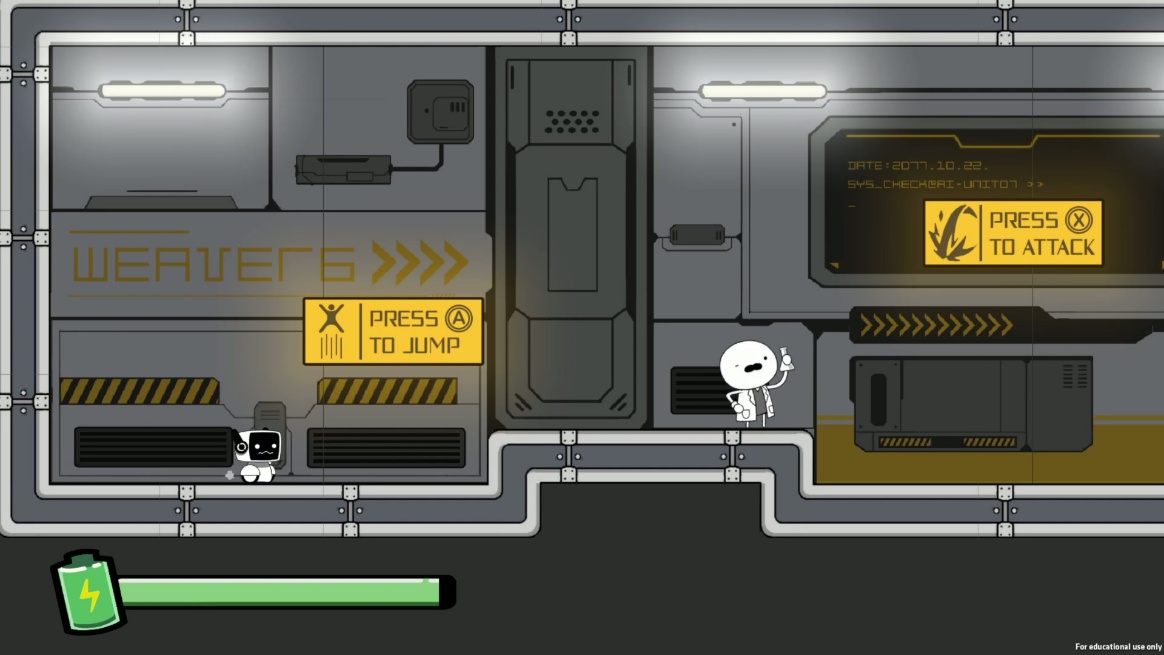
First, I placed the camera center-left of the main character to lead the player’s movement. I also designed a small stair to encourage the player to press A and jump onto it.
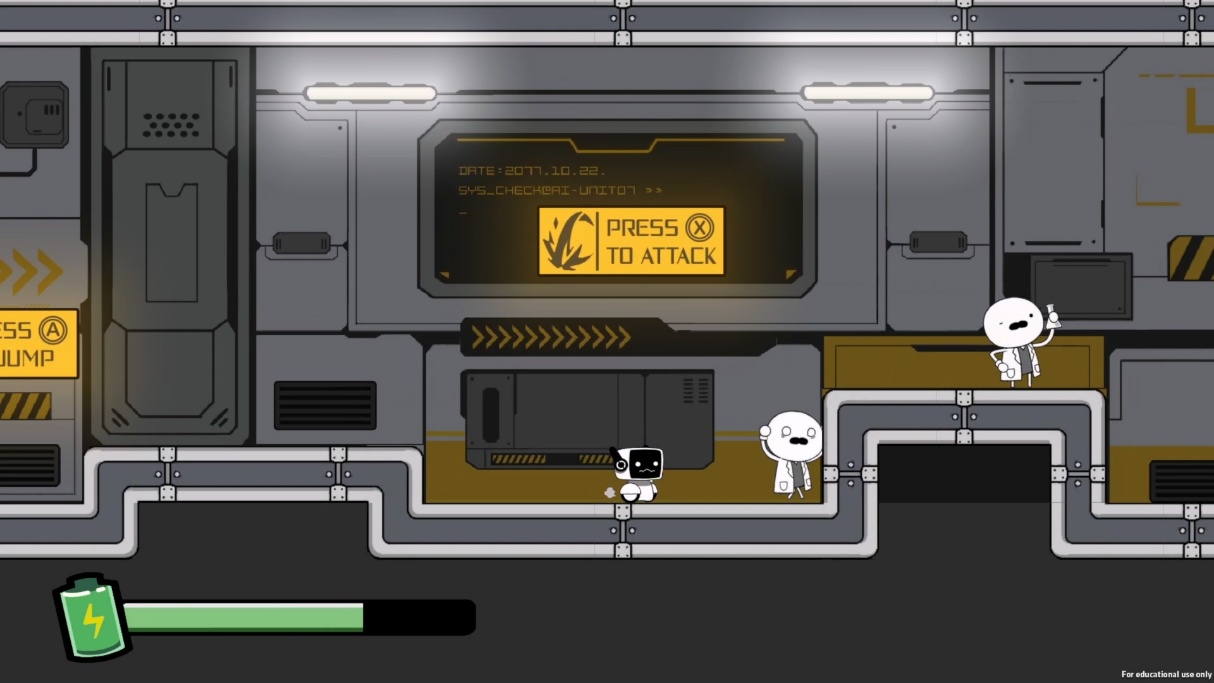
The first enemy is the Scientist. Scientists run away when the player approaches, but they cannot harm the player. This creates a safe target for teaching how to defeat enemies and recharge the battery. I used a wall to stop the enemy from running away and make it easier for the player to kill it.
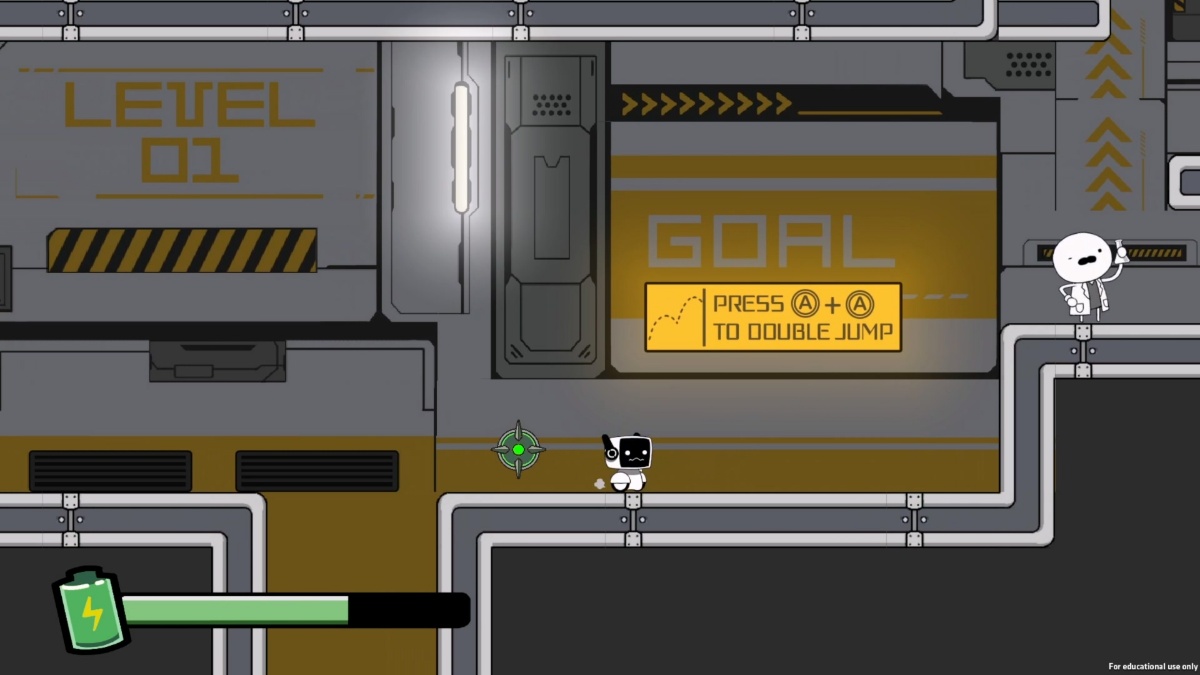
After players become familiar with the normal jump, I introduce the double jump to make learning feel more rewarding and give them a sense of progress.
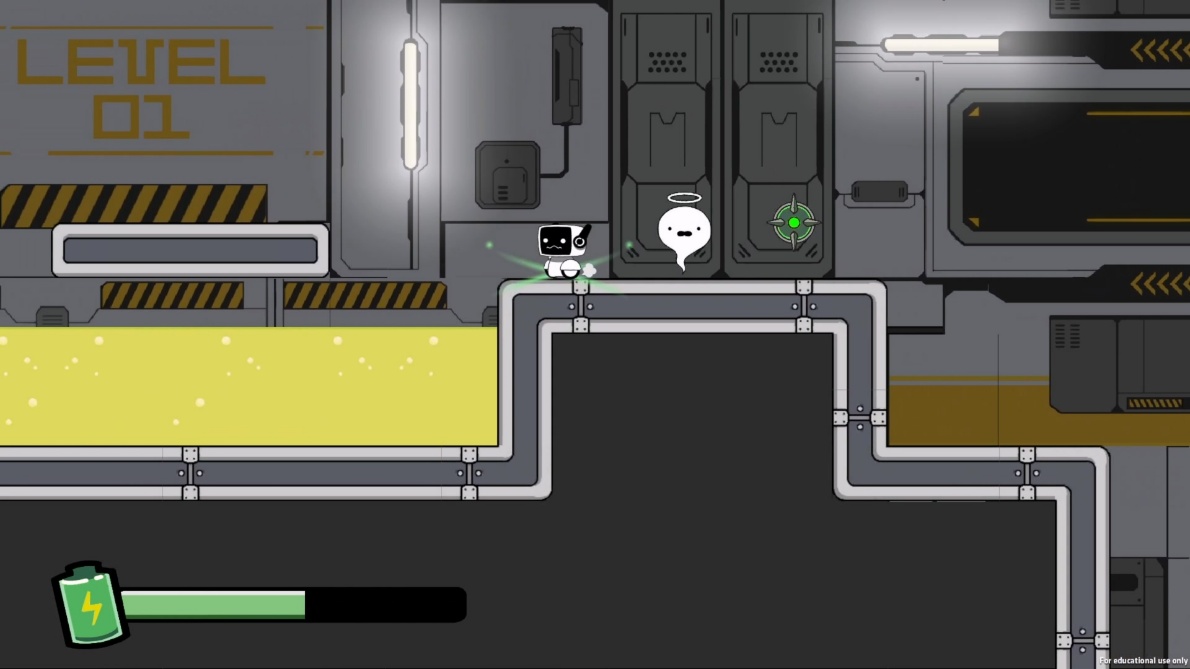
This is the first time acid is introduced. It is relatively safe because the gap only requires one jump to cross, while the double jump gives players enough distance to recover if needed.
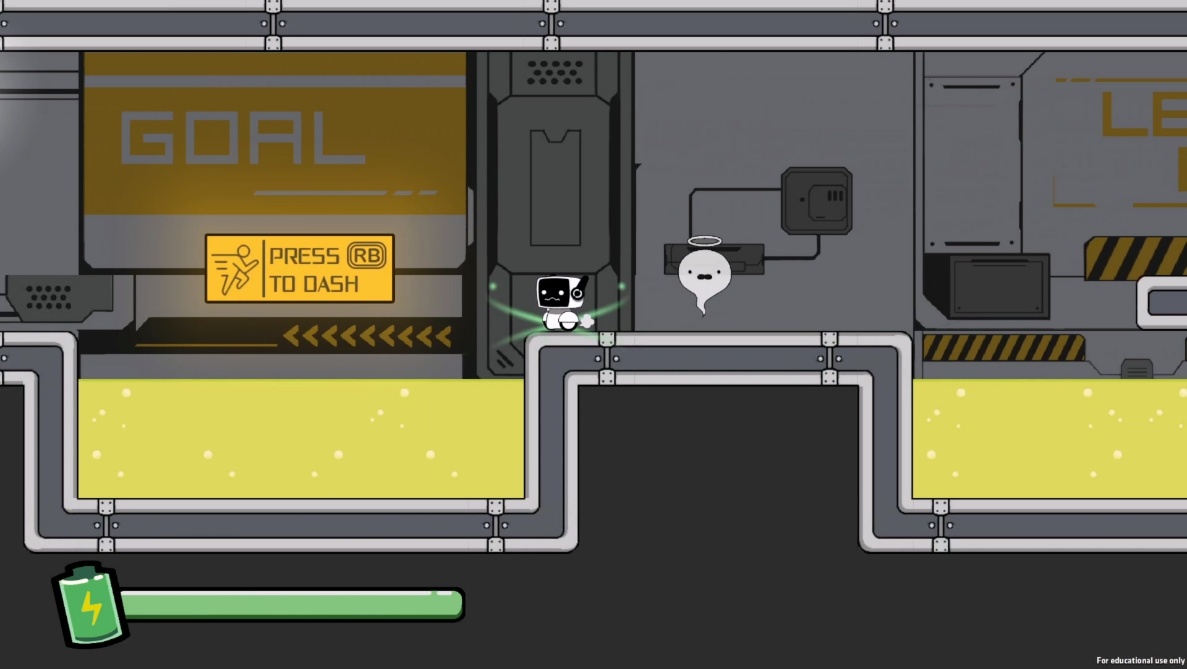
At the end of the level, I teach the dash. The final gap combines basic movement, double jump, and dash as a test of the player’s skills.
In the second level, I introduce a new interaction and a new enemy.
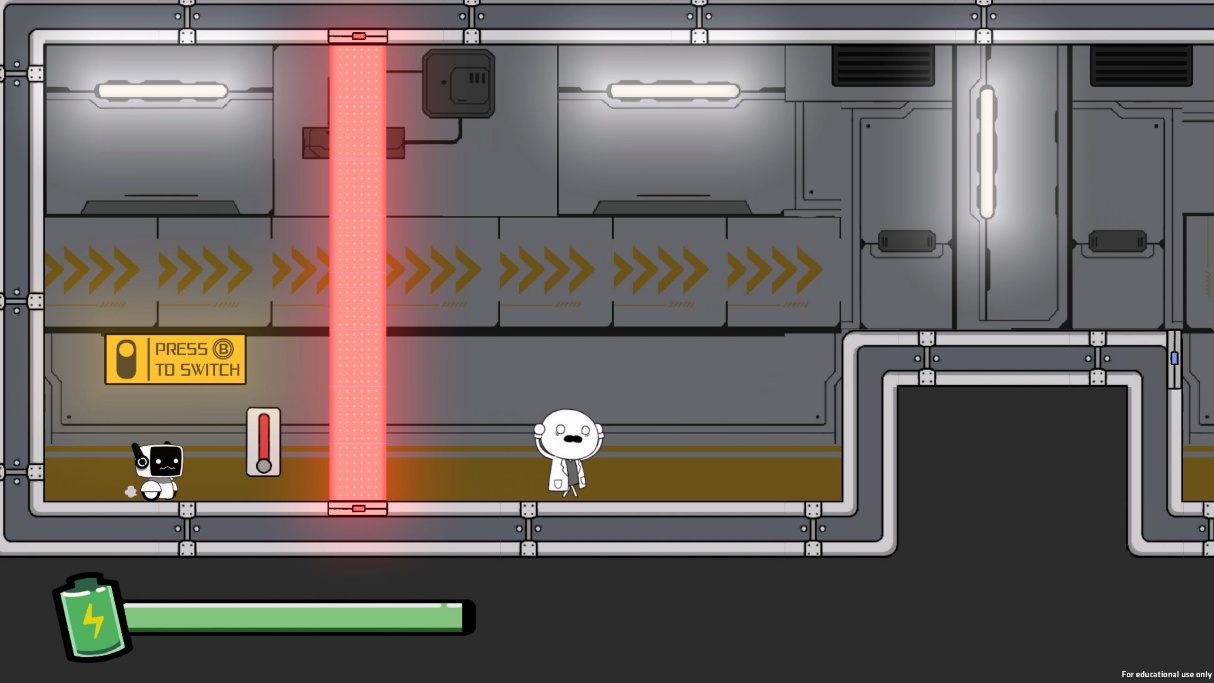
At the beginning of the level, I teach players how to interact with switches. To communicate the goal, I place a sign on the wall and position the switch directly in front of the gate. In the following section, players gradually master how to use switches.
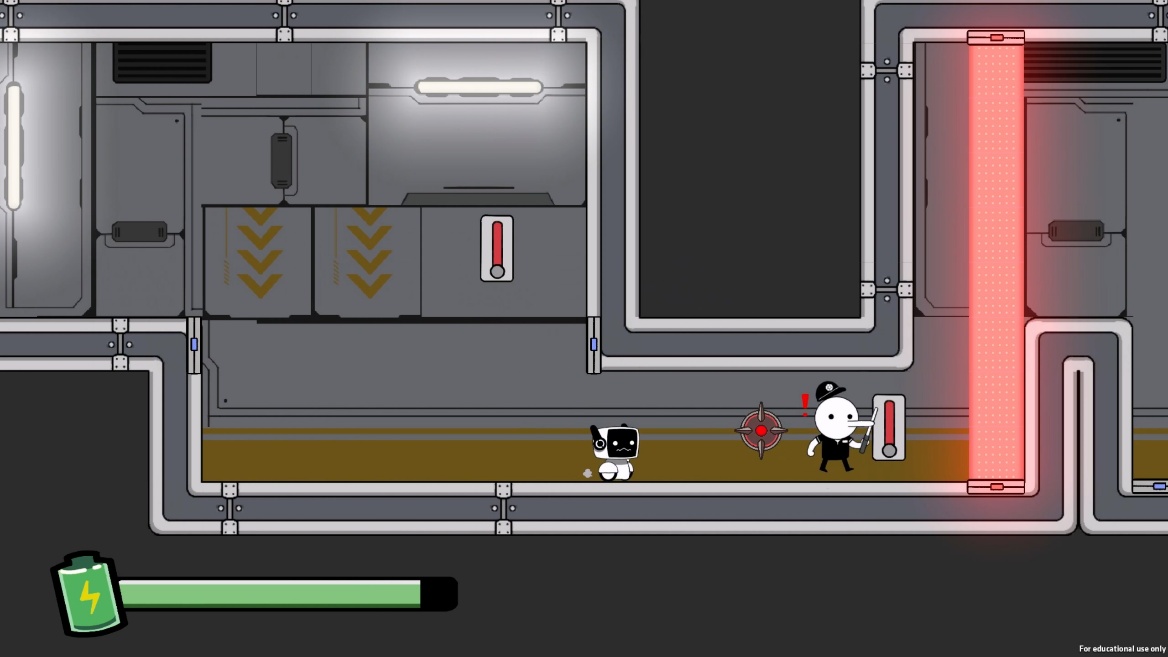
This level also introduces a more aggressive enemy. The Guard chases and attacks the player, causing them to lose energy. This reinforces the skill of defeating enemies while adding pressure to the resource-management loop.